Range Management in North East British Columbia

Range Management in North East British Columbia

Sunday, January 23, 2011

Fire is bad because it causes ecosystem dysfunction?

2 years post fire.

In the beginning of the fall, my research assistants and I hit the exclosures on the Liard to take our 2nd year vegetation samples after Fire 084. We were amazed like many others who have studied the vegetation response in the Boreal after fire. Fire 084 burned through the summer of 2009 and grew to 24,000 ha causing an incredible mosaic of landscape throughout its run. It was actioned along the highway but allowed to run out north away from the major transportation corridor that ties the north to the south.

As you peruse the following pictures, I challenge you to ask yourself some questions:

Why not burn? Is it ecologically sound to write impact assessments on "why an area should burn" when fire has been part of that site's ecological history and evolution?

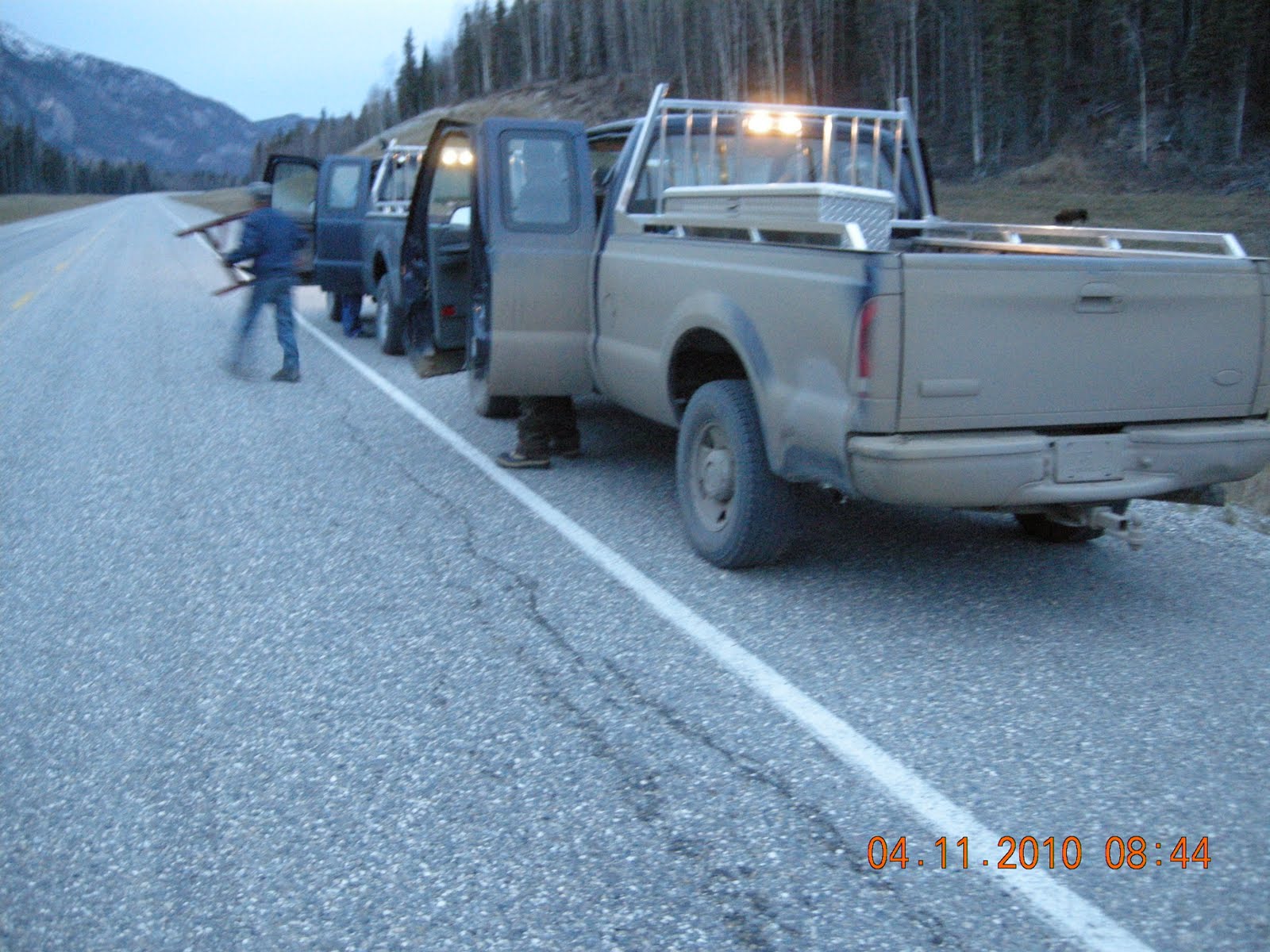
Geared up and heading into the burn to set up the plots inside the exclosures constructed in partnership with Liard River Adventures, the Wildfire Management Branch (NIFAC crews), Oklahoma State University and the Range program of the Ministry of Forests and Range.

Exclosure 1 on the north side of the Liard River, 3 months post fire in 2009.

How much proof is needed to show that fire is the dominant ecosystem driver in the boreal?

Are humans part of the ecosystem?

What happens to those species who depend on fire, when there is no fire?

3 months postfire in 2009 - clearly this landscape has been devestated by fire and this plot is a good example of how fire can cause ED - ecosystem dysfunction.

What does ecologically sound mean anyways? Function ... functionality ... proper use ... uniform distribution ...

And furthermore, why do we not talk about ecosystem dysfunction or what I will now term as the ecological ED whereby there is an inability to develop or maintain an ecosystem including the proper functioning of all natural processes for satisfactory ecosystem performance?

Tell me what you think ... sonja.leverkus@okstate.edu

Trevor Scott setting up the plots and spacing inside the exclosures.

Don Gayton and Ray Couple at exclosure 1 (same as previously shown in 2009) on the north side of the Liard River in 2010 amongst a carpet of Pink corydalis, Dragonhead mint, Bicknell's geranium, moss, grasses and other forbs ... is this system functioning?

Dr. Marten Geertsema and Ray Coupe at the aspen exclosure in Summer 2010. Is fire bad?

The aspen exclosure site 1 year post fire.

Using the 1m2 plots inside and outside the exclosure to compare the plant communities in burned and grazed vs burned and ungrazed.

Some dysfunctional Hairy Wild Rye to the left of Michelle? Max heights for 1 year post fire were up to 160cm ... clearly another case of ED (ecoystem dysfunction)? I would disagree...

Michelle Edwards (formerly of BC Timber Sales) with Dave (as bear watch) from the Hotsprings. Excellent field crew!


Year 2 of Exclosure sampling. Michelle Edwards (formerly of BC Timber Sales) and my mum Dr. Gillian Leverkus and I at the end of sampling. A tip of the hat to Ranger Al for covering bear watch duties for a day in Fall 2010. I owe a big thank you and special recognition to my field crew: Trevor Scott, Gillian Leverkus and Michelle Edwards.

Me 'n Woody the Wood bison. Woody watched over us while we were doing our vegetation work.
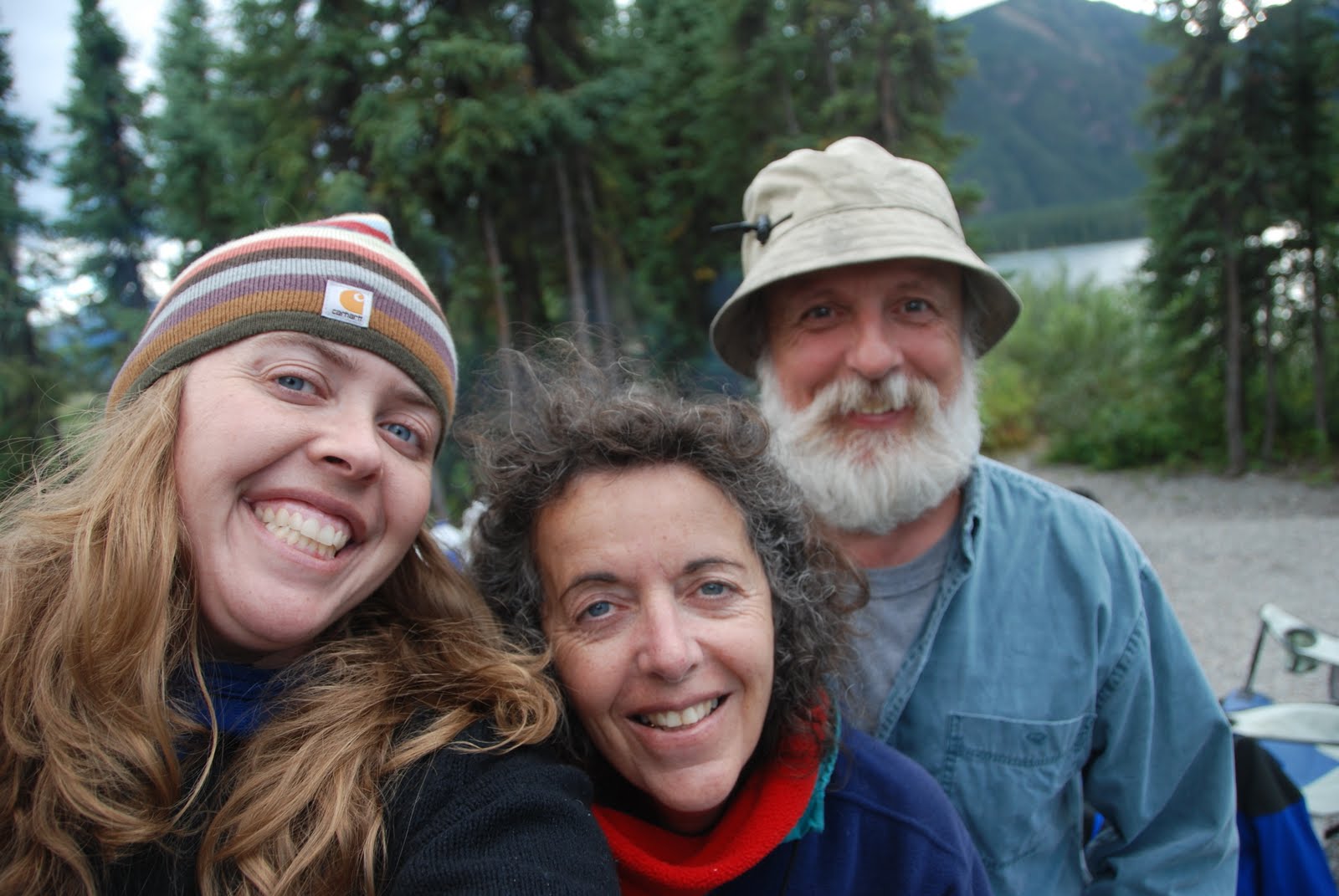
The 2009 field crew: Gillian Leverkus, Trevor Scott and I - the definition of hard work, outdoor enjoyment and family. Thank you mum and Trevor for believing in me and for all your sweat, blood, guts and tears with me!!!! I am proud to be family with you!

Saturday, January 15, 2011

The elusive Wood bison

Charles Dickie, Dr. Helen Schwantje, Wood bison cow, Sonja with Ranger Al protecting us in the background.

It's always true that when you are looking for something that is typically found in a specific location, it's not going to be there that day. Such is true with the Wood bison herds of the Fontas and Liard. This past November brought us a week of working with the bison. The plan was to tranquilize the cows with collars, download the data from the past year and a half, put new batteries in those collars and add 2 more new GPS pods to make our sample size increased to 7 animals per herd and then I was to start analyzing the data for the Society for Range Management conference in Billings, Montana in February 2011 and to further analyze that data for my thesis and for the Ministry of Environment and Habitat Conservation Trust Foundation.

But! Such was not the way it came to an end! Only one collar was retrived from the Fontas (Etthithun herd), however, four collars were retrieved from the Liard (Nordquist herd). Although we had 5 collars in our hands, we were only able to download the data from 4 of the collars (one from Fontas and the rest from Liard). It would appear that the wires at the base of the collars were snapped/torn.

Some pictures from our intense, emotional roller coaster ride of a time doing the bison work include ....

Dr. Helen Schwantje teaching Charles Dickie about the tranquilizers used on the Wood bison.

The crew getting set up on the Alaska Highway with a Wood bison herd less then 20 feet away.

All great stories start out with ... it was a cool, calm morning and the Bison were all grazing peacefully by the side of the Alaska Highway... this herd ended up spooking and stampeding across the highway, not to be found until later in the day. Onto the other herd ...
Conservation Officer Jeff Scott and Wood bison cow.

Tyler Mattheis and Charles Dickie with one of the matriarchs (tranquilized)

Conservation Officer Jeff Scott helping Conrad Thiessen (Wildlife Biologist) and Helen work on the matriarch.

Conrad, Ranger Al and Tyler processing the matriarch.

Conrad Thiessen and I with a matriarch.

All a person could ever hope for is to have two big, strong bulls trying to lift you up to bring you back to the herd should you go down.

Charles Dickie and I putting the new GPS pod collar on.

Conrad won the sharpshooter of the day award for his excellent accuracy with the tranquilizer gun.

Charles Dickie monitoring the Bison herd the day after working with them.

The one who got away! She escaped us and we were unable to recover the collar. In a couple weeks, it should blow off and hopefully Ranger Al and Conrad will go up and retrieve it!

The Crew: Ranger Al Hansen, Dr. Helen Schwantje, Tyler Mattheis (NRRM), Charles Dickie, Sonja, Conrad Thiessen and Wood bison cow (missing: Armand and Conservation Officer Jeff Scott. Photo credit: Armand)

Phantasmagorical Research Team and Pyric Herbivory


Landscape level heterogeneity in the Boreal (Sonja and Sam discussing heterogeneity) Photo credit: Ray Coupe, 2010

I had the extreme good fortune of returning home to Canada and having my research team come up to the North Country to work with me. Over 2 weeks in the summer, we monitored a range reference area on the Halfway River, attempted to do the Nevis Creek reference area, worked around Fort Nelson and up the highway to the Liard exclosures.

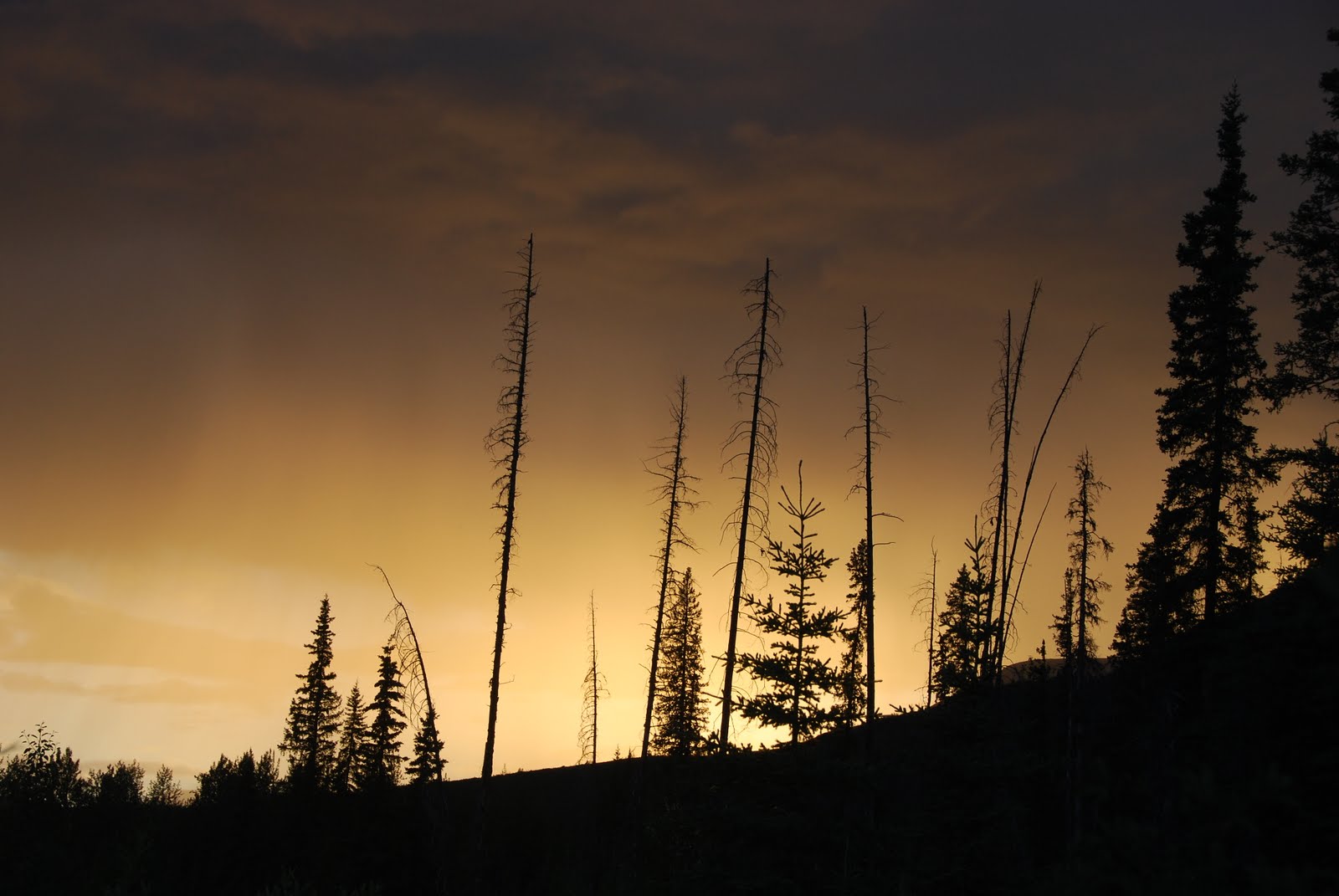
It started with a sunset once the whole team arrived in the north country.

It was one of the greatest practical learning experiences that I have had. I am very thankful to my team for sharing their vast knowledge, following me up the Halfway for a 5 hour round trip every day on quad and then wading across it up to our hips (!) and for attempting the Nevis Creek dance as Ray Coupe called it. I am learning how to be a landscape/range/fire/wildlife ecologist/agrologist/scientist from the best that I know: Sam Fuhlendorf, Don Gayton, Ray Coupe and Marten Geertsema.
The Research Team (excluding field assistants): Fuhlendorf, Geertsema, Gayton, Leverkus and Coupe 2010

"You learn" by Alanis Morissette is playing in the background and so I feel it appropriate to share a few of the things that I was taught and plan to carry with me from these experiences:
1. The best made plans may not always turn out as you hope - have a back-up for the back-up plans.
2. The Prince George Fire Center provides outstanding safety back-up and I am very thankful for the good folks there who were flexible with our crazy schedule of 6am departures and midnights back to camp!
3. People made helicopters for a reason - sometimes it's too muddy to get some places.
4. Trust yourself - Ray Coupe forced me to leave my plant ID book in my pack at camp and that was the best thing he could have done. I only wish I could work with this great man every day. Trusting that we know the plants and their names - it takes some time to become intimate with one's place but without trusting oneself, that intimacy will always stay at one level, when there is so much more to it than having the ID book right beside you all the time.
5. Question and be critical and skeptical of everything.
6. Not all range people know all the range plants all around the world.
7. Sampling methods may not always account for all the variability that is present in a system.
8. Vertical structure is key! ie. how tall things grow in one area vs. another or is there a limiting factor to growth in one area over another -> herbivory?
9. Fire scars on trees, dendrochronology and pollen/charcoal in lake sediments - hard to argue with the presence of fire if you have these data sets.
10. Bison don't belong on the side of the Alaska highway as sacrificial red-listed species to be feasted upon by large automobiles
11. That the strength and guidance of 4 great men has come to mean the world to me.

My best friend and yours (if you're into a beautiful bunchgrass that is high in protein throughout the winter) - Festuca altaica - Altai fescue.

Below are some pictures from this experience.


Avens

Dr. Fuhlendorf.

Crossing the Halfway

Hoofing it to the Halfway Meadow Range Reference Area

What is the difference you ask? Vertical structure. What is the reason for that you ask? Cold air drainage or perhaps bison grazing but not really an overindulgence in fire ... McQue Flats Range Reference Area.

Gayton along the transect line just after the hail storm.


Would've been nice to have the key ... next time we'll know that there is a gate!


Sam crossing the Halfway


Bogs

Permafrost and Don Gayton

The team up at the Liard exclosures. Fire sure ruins the boreal forest eh?


Dr. Geertsema checking out the age of this spruce when the landslide occurred.

Number one chef extraordinaire on the Dunedin is Ray Coupe.

The Research Team (missing: Don Gayton)

Sunset over the Halfway River Valley on our way back to base camp.

On the top of Trutch (wild caraway and oxeye daisy spreading along the road systems ...)

Other members of the pyric herbivory research team!

Tuesday, October 12, 2010

With a little help from my friends ...

I never said it would be easy to pursue a PhD while remaining a full time employee of the BC Forest Service, however, there appears to be things that I had thought would be easier to accomplish then they turned out to be. In order to get 6 GPS collars deployed on horses across the Muskwa-Kechika Management Area, it did prove to be a logistical challenge that would not have been acheived if it hadn't of been for some very talented, kind, considerate and supportive friends and colleagues. I would like to recognize you here as contributors to our work and I would like to thank you for being there at the precise moment when I needed you the most:


Lotek www.lotek.com/update.htm - Stewart Strathearn who did a fabulous job in getting the GPS collars to Fort Nelson in such a short time


Central Mountain Air who went above and beyond in their customer service, saved me a drive in the middle of the night to Fort St. John and flew the collars up on their first plane to Fort Nelson on thursday morning. Fly CMA!

Don Lewis out of the PG Fire Center who rigged up a radio receiver for me at the very last minute and sent it up from Prince George with CO Nathan Smienk.

Conservation Officer Nathan Smienk who allowed me to play a really good joke on him but then ended up saving the day by picking up the receiver from PG and almost being the ultimate champ of picking up the collars in Fort St. John except that they didn't make it there in time ... the lesson learned here is that if you ever need to fly something quickly from one location to another, make sure that you send it express or priority and not just general delivery. General delivery allows for your GPS collars to sit all day and night in the Pearson airport in Toronto and then after finally getting to Vancouver, it also allows them to miss 2 out of 3 flights to northern BC which really, really makes people attempting to do research loose a lot of sleep!!!! Nathan - you're a life saver! I'm glad you're part of the north country crew.

Marten Geertsema who picked up and dropped off the receiver from PGFC to CO Nathan after a large workload kept him very busy - thank you for doing that Marten and thank you for talking me through my intense distressed phone calls that felt like they were quite numerous over the past 2 weeks!!!

Gator - Zone Protection Officer - who I'm not sure what I would do without and who never appears to get rattled - thank you for coming up to help me get those first 2 collars connected and helping to figure out the receiver to check the VHF frequency on the collars! Thank you for your patience Gator and for your support.
Gator helping to test the VHF frequency before deployment.

Ladies at Greyhound who helped with the shipping to the Yukon and loaded the box as the bus starting to load ...

Darwin and Wendy Cary of Scoop Lake Outfitters who provided logistical support and patience in waiting for the collars to arrive in Watson Lake for their pickup!

Brady Allred for the last minute question that I realized I thought about right before I put the collars on the bus - does it matter the sex of the animal to be collared?!

Ty Schippmann who saved the day literally by helping me put the collars together the right way and siliconing them! Not sure how to repay that good catch that I had missed ... doesn't matter if I have a PhD or not - somethings are just natural intelligence eh? Good thing Ty was there to make sure the collars got put together right!!!
Ty working on the collars at my desk

Blaine Anderson who provided amazing technical support just in the nick of time

Peter Hisch and Dave Gasper – Peter put us in touch with Dave out of Rocky Mountain Forest District/ Fire Center who helped teach Gator and I how to run the receiver so we could hit the frequency of each collar
Testing the collars

Michelle Edwards and Stephanie Wilkie – box makers and support staff extraordinaire! Thanks for having my back Edwards - your boxes were awesome!
Stephanie and I heading to the aiport to ship the last 2 sets of collars out to the mountains

Peter Villers and Tracy at Villers Air Service who were kind enough to fly the 2 boxes of collars out to the mountains for me. Amazing pilots - great people!!! http://www.villersair.com/ Fly Villers!!!!

Larry and Lori Warren of Tuchodi River Outfitters for helping with the logistics of collar deployment!

Barry Tompkins, Gwen and Vicki of Big 9/ High and Wild Wilderness Safaris for their logistical support! Thank you ladies for being in such great communication with me as I was getting things figured out. I send good thoughts so that the collars can be deployed as soon as the wind dies down!

Brent Bye, Gator and Stanley from the PG Fire Center and Fort Nelson NIFAC for getting me up in the air to start figuring out how I'm going to do my vegetation work and mapping, as well as to Stanley for teaching me about fire behaviour and Gator for talking about carbon with me.

Additional technical (and emotional) support: Ranger Al, Jeff Scott, Liard River Adventures' Schippmanns, Mum and Trevor, Chad Nixon and Laura Hickman, Conrad Thiessen, Laurie and Barry Dolan, Shelly Boulton, Stephanie Smith and Lana Lowe.

And for their above and beyond support, I can not thank the following 2 enough:
The BC Range Program - I can't say enough about the wonderful people in the range program and especially at Range Branch who are helping me out. Thank y'all!!!

Dr. Sam Fuhlendorf for giving me the reins to steer through some really thick brush and then arriving out on top of the big country overlooking the rangelands that we all cherish so much. Thanks for the support from so far away - it was a tough ride but I think I hung on for the whole 8 seconds ... where's the belt buckle?

And the data collection begins!!

Nice collars! (3300L from Lotek)

I couldn't do this without a little help from my friends across the Province. I tip my hat to y'all and thank you sincerely very much for being part of the ride with me!I know this was a big push to get this part of the research up and off the ground and that it really only has taken shape in the last 30 days, but, we almost did it - as long as that last set of collars makes it safely to Big 9 ... the winds really should die down soon I hope for you Barry ...